
Getting a mortgage approved starts long before you ever sit down with a lender. It starts with having your paperwork in order. Missing a single document can stall your closing, spike your stress, and in competitive markets, cost you the home entirely.
This guide pulls together the most useful mortgage application checklist tools and resources available in 2026, so you can walk into any lender conversation fully prepared. Whether you’re a first-time homebuyer trying to figure out what a W-2 even is, or a seasoned buyer refinancing for a better rate, having a clear checklist in hand changes everything.
We’ve ranked these resources by how practical and complete they are for real borrowers — not just how polished the PDF looks. Mortgage Rate Hawk‘s own checklist resource leads the list because it’s built around the loan types Duane Buziak’s team actually works with across VA, FL, TN, GA, DC, NC, SC, and MD. Let’s get into it.
The Fully Worked Dollar Example: What a Real FHA Checklist Looks Like
Before diving into the tools, let’s ground this in a real scenario so you know exactly what you’re preparing for.
Picture this: you’re purchasing a home in Virginia for $320,000 using an FHA loan. You put 3.5% down, which equals $11,200. Your loan amount is $308,800. You’re a W-2 employee with two years at the same employer — a clean, straightforward file. Here’s the complete document list your lender will need at first submission:
1. Last two years of W-2s (both years, all employers)
2. Most recent 30 days of pay stubs
3. Last two months of bank statements (all pages, including blank pages — this is the most commonly missed item)
4. Last two years of federal tax returns (1040s, all schedules)
5. Government-issued photo ID
6. Social Security card or written authorization
7. Ratified purchase contract (once under contract)
8. Homeowner’s insurance quote or binder
9. Signed credit authorization form
10. Explanation letter for any large or unusual deposits
11. Landlord contact or 12-month rental history if currently renting
12. Gift letter plus donor bank statement if any gift funds are used (required per HUD guidelines)
13. HOA documents if purchasing a condo
14. Flood zone determination (typically lender-ordered)
That $308,800 FHA loan falls well within 2026 FHA loan limits for most Virginia counties, which you can verify directly through HUD.gov. The scenario above is what a clean, well-prepared FHA file looks like. The tools below help you build that file before your first lender call.
Loan Type Comparison: What Each Program Requires
| Loan Type | Down Payment | Key Docs Beyond Standard | Notable Requirement | Cash-Out LTV Max |
|---|---|---|---|---|
| FHA | 3.5% (580+ credit score) | Gift letter + donor bank statement | All income sources documented per HUD | N/A (purchase focus) |
| VA | $0 (full entitlement) | DD-214, COE, Statement of Service | COE required — obtainable via VA.gov eBenefits | 100% LTV |
| Conventional | 3%–20%+ typical | Standard income, asset, ID docs | PMI required below 20% down | 90% LTV |
| Jumbo | 10%–20%+ typical | 12 months reserves common | More extensive asset documentation | Varies by lender |
| First-Time Buyer Programs | Varies by program | Program-specific eligibility docs | Income limits and homebuyer education may apply | N/A (purchase focus) |
1. Mortgage Rate Hawk — Duane Buziak’s Free Application Checklist
Best for: Borrowers in VA, FL, TN, GA, DC, NC, SC, or MD wanting loan-type-specific guidance from a licensed professional.
Mortgage Rate Hawk is Duane Buziak’s rate-hunting and document-prep resource, built around the actual loan types and state-specific requirements his team works with daily.

Where This Tool Shines
The difference between a generic PDF checklist and what Mortgage Rate Hawk offers is personalization. Rather than handing you a one-size-fits-all document list, Duane’s team walks you through what your specific file needs based on your loan type, employment situation, and state of purchase. That matters because an FHA file in Virginia looks different from a VA file in Florida.
The free no-touch credit check available during pre-approval is a practical advantage too. You can get a clear picture of your credit standing without a hard inquiry hitting your score before you’re ready to commit. Same-day callbacks at 804-212-8663 mean you’re not waiting days to find out if you’re missing something critical.
Key Features
Loan-Type-Specific Checklists: Covers FHA, VA, Conventional, Jumbo, and First-Time Homebuyer programs — not a generic template.
Free No-Touch Credit Check: Available during pre-approval so you understand your credit profile before shopping rates.
Same-Day Callback: Duane Buziak personally reachable at 804-212-8663 — real human guidance, not a chatbot queue.
Pre-Approval to Closing Walkthrough: Personalized checklist guidance through every stage, not just the initial document list.
8-State Licensed Coverage: Specific to VA, FL, TN, GA, DC, NC, SC, and MD — not a generic national template that ignores state-level nuances.
Best For
Borrowers who want a personalized document roadmap rather than a static PDF. Particularly strong for first-time homebuyers who need someone to explain what each document is and why it’s required, and for VA borrowers navigating COE and entitlement documentation for the first time.
Pricing
Free. No cost to get a personalized checklist walkthrough or pre-approval consultation. Mortgage Rate Hawk’s model is built around finding you the right loan at a competitive rate — the guidance comes with that process.
2. CFPB ‘Your Home Loan Toolkit’
Best for: Borrowers who want a lender-neutral, government-published reference for understanding the full mortgage process.
The CFPB’s Your Home Loan Toolkit is a federally mandated PDF guide from the Consumer Financial Protection Bureau that walks borrowers through the mortgage application process, including a Loan Estimate comparison worksheet.
Where This Tool Shines
Because it’s published by the CFPB, there’s zero lender bias here. No one is trying to sell you anything. The toolkit explains the mortgage process from shopping for a loan through closing, and it includes a side-by-side Loan Estimate comparison worksheet that is genuinely useful when you’re evaluating offers from multiple lenders.
The document preparation section aligns with TRID disclosure rules — the federal regulations that govern how lenders must present loan terms and costs. If you want to understand what a Loan Estimate should contain and how to compare them accurately, this is the authoritative starting point.
Key Features
Loan Estimate Comparison Worksheet: Structured template for comparing offers from multiple lenders side by side — critical for rate shopping.
Step-by-Step Document Preparation: Walks through what borrowers typically need to gather before applying.
TRID-Aligned Content: Updated to reflect current federal disclosure rules governing Loan Estimates and Closing Disclosures.
No Marketing Agenda: Government-published — purely informational with no lender affiliation.
Freely Downloadable PDF: Printable format you can work through at your own pace.
Best For
Any borrower who wants to understand the mortgage process from a neutral, regulatory perspective before engaging with lenders. Especially useful for rate shoppers who want to know exactly how to read and compare Loan Estimates across different offers.
Pricing
Free. Published and maintained by the U.S. Consumer Financial Protection Bureau at no cost to borrowers.
3. HUD FHA Loan Resource Center
Best for: FHA loan borrowers and first-time buyers who want the authoritative source on what underwriters actually require.
HUD’s FHA Loan Resource Center is the official U.S. Department of Housing and Urban Development reference for FHA loan documentation — the same source FHA underwriters reference when reviewing your file.
Where This Tool Shines
When a lender tells you that HUD requires a gift letter and the donor’s bank statement, this is where that requirement actually lives. The HUD resource center isn’t a marketing document — it’s the regulatory backbone of every FHA loan. Knowing what’s in here helps you understand why your lender is asking for what they’re asking for, which makes the whole process feel less arbitrary.
For borrowers using gift funds toward their down payment — common with first-time homebuyers — the HUD guidelines on gift fund documentation are the definitive reference. A gift letter alone isn’t always enough; the donor’s bank statement showing the funds leaving their account is typically required as well.
Key Features
Official FHA Underwriting Reference: The same source lenders and underwriters use — not a third-party summary.
Gift Fund Documentation Rules: Covers exactly what HUD requires when gift funds are part of the down payment.
Income and Asset Documentation Standards: Explains what FHA requires across different income types and employment situations.
Property Documentation Guidance: Covers appraisal, condition, and property eligibility requirements.
No Marketing Content: Pure regulatory reference — no upsells, no lender recommendations.
Best For
FHA borrowers, first-time homebuyers using low down payment programs, and anyone whose lender has cited a HUD requirement they want to verify independently. Also useful for self-employed borrowers on FHA loans who need to understand income documentation standards.
Pricing
Free. Maintained by the U.S. Department of Housing and Urban Development.
4. VA.gov Home Loan Benefits Page
Best for: Veterans, active-duty service members, and surviving spouses navigating VA loan documentation for the first time.
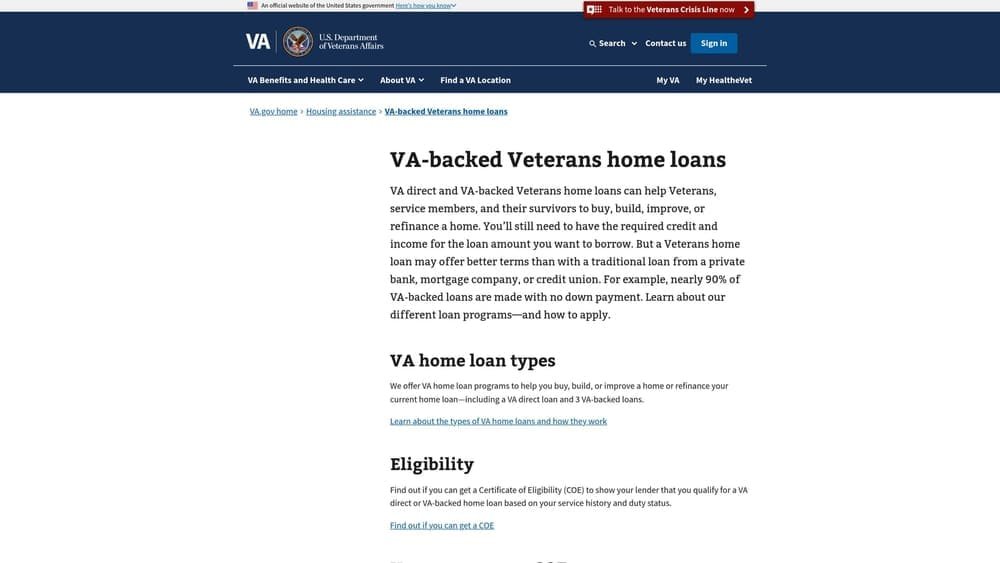
VA.gov’s Home Loan Benefits page is the official Department of Veterans Affairs resource for VA loan documentation — the only authoritative source for COE requirements, DD-214 guidance, and entitlement verification.
Where This Tool Shines
VA loan documentation has unique requirements that don’t appear in any other loan type. The Certificate of Eligibility (COE) is the foundational document that proves your VA entitlement, and knowing how to obtain it — either through the VA’s eBenefits portal using your SSN and date of birth, or through a lender who can pull it electronically — is the first step in any VA loan application.
The VA.gov page also covers second-tier (bonus) entitlement mechanics: the county loan limit multiplied by 25% gives you the maximum VA guarantee, subtract any used entitlement, and multiply by four to get your zero-down purchase limit. Understanding this matters if you’ve used VA benefits before and want to know how much remaining entitlement you have for a new purchase.
Key Features
COE and DD-214 Guidance: Official documentation on how to obtain your Certificate of Eligibility and what discharge paperwork is required.
eBenefits Portal Access: Direct pathway to request your COE electronically through VA — faster than paper requests.
Active-Duty Statement of Service: Covers what’s required for borrowers still on active duty who don’t yet have a DD-214.
Funding Fee Exemption Information: Explains which veterans qualify for VA funding fee waivers (typically those with service-connected disabilities).
Entitlement Verification: Authoritative reference for understanding full vs. partial entitlement and how prior VA loan use affects current eligibility.
Best For
Any veteran, active-duty service member, or surviving spouse considering a VA loan. Essential reading before your first lender conversation — knowing your entitlement status and having your COE in hand puts you ahead of most borrowers. VA cash-out refinance allows up to 100% LTV per VA guidelines.
Pricing
Free. Published and maintained by the U.S. Department of Veterans Affairs.
5. Rocket Mortgage
Best for: Borrowers who prefer a fully digital, self-guided application experience with built-in document prompts.
Rocket Mortgage is a large national retail lender with a digital-first application platform that guides borrowers through document collection with inline upload prompts and real-time status tracking.
Where This Tool Shines
Rocket’s application interface is genuinely well-built for borrowers who want to move through the process independently. Rather than receiving a static checklist and figuring out the rest yourself, the platform surfaces document requests contextually — as you answer questions about your income and employment, it tells you exactly what to upload next.
The automated income and asset verification integrations can accelerate the process for borrowers whose financial institutions connect to the platform. That said, Rocket is a retail lender, meaning their rates and fees are set by their own pricing model. Always compare their Loan Estimate against other offers before committing — the convenience of a slick interface doesn’t automatically translate to the most competitive rate.
Key Features
Inline Document Checklist: Document requests surface dynamically within the application — not a separate PDF to track separately.
Real-Time Upload and Status Tracking: See exactly where your application stands and what’s still needed.
Automated Verification Integrations: Income and asset verification can connect directly to financial institutions in some cases.
Multi-Loan-Type Coverage: Handles conventional, FHA, VA, and jumbo document flows within the same platform.
Mobile-Friendly Submission: Full document upload capability from a smartphone.
Best For
Borrowers who are comfortable with a self-service digital experience and want a guided, step-by-step document collection process without relying on a loan officer for each prompt.
Pricing
No cost to apply. Lender fees and interest rates vary. Always request and compare a formal Loan Estimate against other lenders before making a decision — rate differences compound significantly over a 30-year term.
6. Veterans United
Best for: Military borrowers who want VA-loan-specific document guidance from a lender that specializes in the VA program.
Veterans United is a VA-loan-specialist lender with publicly available educational resources and document guides built specifically for military borrowers navigating the VA loan application process.
Where This Tool Shines
Veterans United’s educational content is built around VA loan terminology in plain language — which matters more than it might seem. Terms like “entitlement,” “funding fee,” “COE,” and “Statement of Service” can be confusing for first-time VA borrowers, and Veterans United’s guides translate those concepts clearly.
Their loan officer-assisted document collection process means you’re not navigating the VA paperwork maze alone. For borrowers who’ve never used their VA benefit before, having a specialist walk through the COE request, DD-214 submission, and entitlement calculation alongside you is a meaningful advantage over a generic checklist.
Key Features
VA-Specific Document Checklist: Military terminology explained in plain language — COE, DD-214, Statement of Service all covered.
First-Time VA Borrower Guidance: Educational content tailored to veterans using their benefit for the first time.
Loan Officer-Assisted Collection: Human support through the document gathering process, not a fully self-service model.
COE and Entitlement Guidance: Covers both the document itself and how entitlement affects purchase power.
Military-Focused Specialization: VA loans are their primary product — not a generalist lender checklist with a VA tab added on.
Best For
Veterans and active-duty service members who want VA-specialist guidance through the document collection process, particularly first-time VA loan users who benefit from human explanation alongside the checklist.
Pricing
No cost to apply. VA funding fee and lender fees apply. Compare their Loan Estimate against other VA lenders — including a mortgage broker who can access hundreds of wholesale lenders — before deciding.
7. Movement Mortgage
Best for: Borrowers who prefer a human-first loan officer relationship over a self-service digital portal.
Movement Mortgage is a national retail lender known for a human-first loan officer model, with pre-application document guidance delivered through direct loan officer engagement rather than a fully automated platform.
Where This Tool Shines
Not every borrower wants to navigate a digital portal alone. Movement’s model centers on the loan officer relationship — your document checklist is personalized to your file by a human who has reviewed your situation, not generated automatically from a questionnaire. That distinction matters for borrowers with non-standard income situations, multiple employment sources, or complex asset pictures.
Movement has a meaningful presence in several of Duane Buziak’s licensed states, including VA, NC, and SC, which means their loan officers in those markets tend to be familiar with local market conditions and property types. Their hybrid digital-plus-human submission process lets you upload documents digitally while still having a loan officer guiding the collection.
Key Features
Loan Officer-Driven Checklist: Document list is personalized to your specific file — not a generic template.
Multi-Program Coverage: Handles conventional, FHA, VA, and USDA loan document requirements.
Hybrid Submission Process: Digital upload capability with human loan officer oversight and guidance.
Pre-Approval Document Guidance: Loan officer involvement begins at pre-approval, not just at application submission.
Regional Market Presence: Strong footprint in VA, NC, and SC — markets where local knowledge adds value.
Best For
Borrowers who want a relationship-based experience with a loan officer who knows their file, rather than a self-service platform. Particularly useful for borrowers with complex income situations where a human review of the document checklist is more valuable than an automated prompt.
Pricing
No cost to apply. Lender fees and interest rates vary. Always compare Loan Estimates side by side — Movement is a retail lender, so comparing their pricing against a broker who accesses hundreds of wholesale lenders is a worthwhile step.
Making the Right Choice for Your Mortgage Prep
Here’s the honest truth: the right checklist tool depends entirely on your loan type, your comfort with technology, and how much human guidance you want alongside the document list. No single resource covers everything for every borrower.
If you’re applying for a VA loan, start with VA.gov to understand your COE and entitlement, then work with a specialist — either Veterans United if you want a VA-focused retail lender, or Duane Buziak’s team at Mortgage Rate Hawk if you want a broker who can compare VA pricing across hundreds of wholesale lenders.
If you’re pursuing an FHA loan, the HUD resource center is your authoritative reference for what underwriters require, and the CFPB toolkit helps you compare Loan Estimates once offers start coming in. Mortgage Rate Hawk’s personalized checklist walkthrough is particularly valuable for first-time FHA borrowers who need someone to explain the gift fund documentation rules or the difference between a bank statement summary page and a full statement.
For conventional or jumbo borrowers, the CFPB’s Loan Estimate comparison worksheet is one of the most underused tools available. Rate differences that look small on paper compound into tens of thousands of dollars over a 30-year term. Watch. Compare. Save.
If you want a digital-first, self-guided experience, Rocket Mortgage’s inline document prompts are well-built. If you want a human loan officer relationship, Movement Mortgage’s model delivers that. And if you want someone who hunts down the right rate across the wholesale market rather than presenting you with a single retail price — that’s exactly what Mortgage Rate Hawk is built to do.
Mortgage Rate Hawk doesn’t just hand you a PDF and wish you luck. We track down the right loan, walk you through every document, and stay with you from pre-approval to closing. That’s the hunt.
Get your free rate comparison and personalized loan match today — same-day callbacks available at 804-212-8663, and a free no-touch credit check to get your pre-approval started on the right foot.


2 Responses